

In the fashion production landscape, many brands face a strategic decision: rely on a supplier who delivers a finished product, or take the reins of production by separating the purchase of raw materials from manufacturing. This second path is the one that guarantees maximum control.
The goal is to obtain a Made in Italy product controlled at every single stage, while maintaining total flexibility on costs and the final product. By separating the phases, you know exactly how much you are spending on fabric and how much on sewing, deciding where to allocate resources based on the value you want to give the garment.
However, this freedom requires careful operational management. You need to know the technical timings, yields, and compatibility of materials with the desired product, as well as coordinate logistics so that the fabric arrives at the factory at the right time. In this article, we analyze in detail how we manage this process at 2306. Our role is to physically accompany you to the source of materials and manufacturing, taking charge of all the operational complexity in between.
1. Fabric Selection: choosing at the source
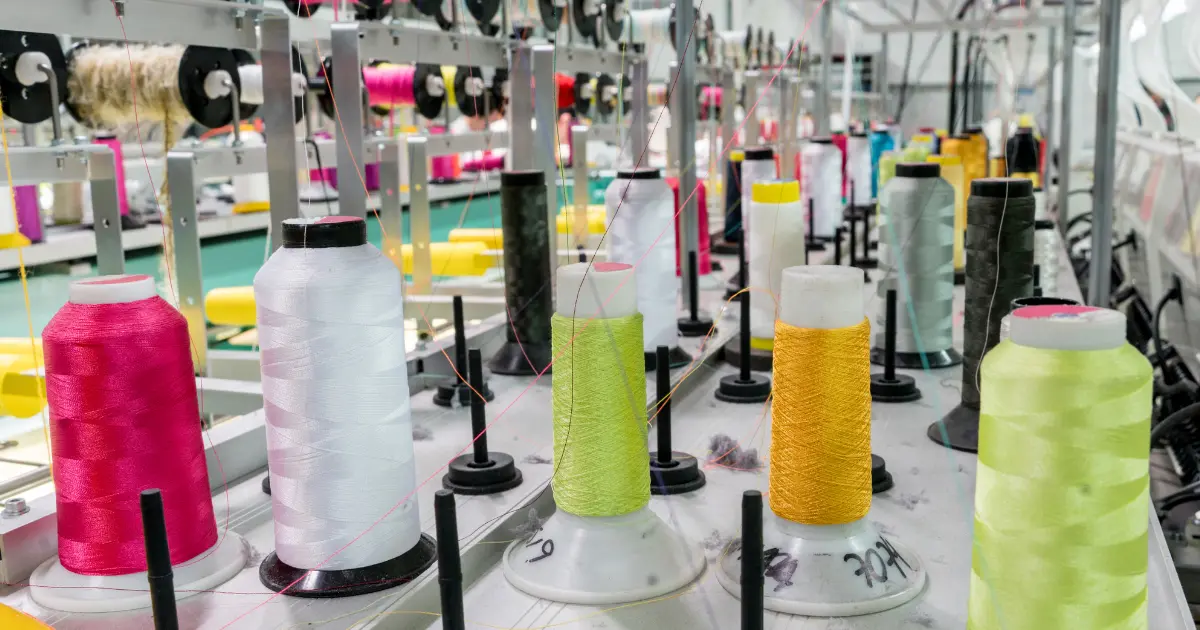
The quality of a garment starts with the choice of yarn and the consistency of the material. The first phase of our work focuses on the raw material. Our task is to identify the best opportunity in terms of quality/price ratio, based strictly on the budget you have established and the technical needs of the collection.
The value of our service lies in the initial filter: based on your brief, we organize targeted visits to selected Italian fabric suppliers. The number of suppliers we evaluate together varies based on the complexity of the project:
-
For Men’s Collections: We usually select 3 or 4 fabric suppliers. Menswear tends to work on more defined product types, allowing for a rapid selection.
-
For Women’s Collections: Here the range expands to 7 or 8 suppliers. Womenswear offers a much wider variety of types, making a vast exploration necessary to find the perfect item for the collection.
In this phase, we support you not only in the aesthetic choice but in the technical purchase: we verify minimum orders (MOQ), lead times, and technical sheets to ensure that the chosen fabric is suitable for industrial production.
The Strategic Choice: Regular Production or Stock Fabrics?
During the selection, we will face a fundamental decision for your business plan: buying regular fabrics (programmed production) or stock fabrics (inventory).
The main criterion for choosing is price. If your goal is maximum competitiveness, stock is the ideal solution. It allows you to access high-end fabrics at a fraction of the original cost. This option is excellent for those with limited budgets who do not want to compromise on product quality. If, on the other hand, your collection requires continuity over time, such as for a continuous item (best seller), or if you need specific solutions, you must opt for regular fabric. The cost will be different and the times longer, but you will have the guarantee of being able to produce a perfectly customized product.
2. Selecting the Manufacturer: Comparing Production Solutions
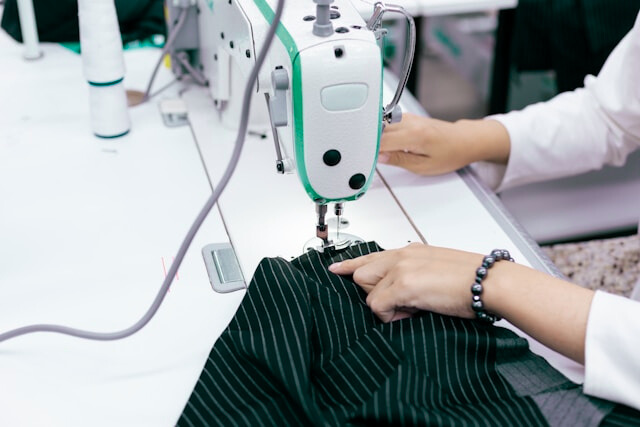
Once the fabric is secured, we need to decide who will transform it into a finished garment. Every workshop has its own specialization and its own cost per minute. Following the fabric purchase, we accompany you to different manufacturers. We carry out a pre-selection and present you with the 2 or 3 options best suited to your needs.
This targeted selection is necessary to optimize timing and results. Presenting a supplier who works for high fashion if you have an entry-level budget would be inefficient, just as proposing an industrial laboratory for a sartorial product would be. Having 2 or 3 quotes on the table from companies already aligned with your goals allows you to:
-
Compare different production solutions.
-
Evaluate pure manufacturing costs (CMT).
-
Choose the partner best suited to your precise market positioning.
Once fabric and manufacturer are chosen, your operational commitment ends. From this moment on, we manage the dialogue between these two entities.
3. Production and Timing: How to Calculate “Time to Market”
This is the phase where coordination becomes crucial. A fundamental aspect for your commercial planning is managing expectations regarding release times. Timings are not standard but depend entirely on the choice made upstream regarding fabrics:
Scenario A: Production with Stock Fabrics This choice significantly speeds up the process. Since stock fabrics are ready for delivery, we do not have to wait for weaving times.
-
From the “go-ahead” to produce, it takes about 30 days for manufacturing.
-
In little more than a month, you can have the goods ready. It is ideal for flash collections, fast restocks, or for those who want to test the market quickly.
Scenario B: Production with Regular Fabrics This path requires advance planning. Here we must respect the technical times of the textile supply chain.
-
It takes about 60-90 days just to produce the fabric.
-
Once the fabric arrives at the factory, it takes about 30 days to produce the garments.
-
You must consider a longer total cycle, which must be planned months in advance of the sales season.
Our role is to constantly monitor these deadlines to ensure that the manufacturer respects the agreed delivery date.
4. Quality Control and Final Logistics
Production does not end when the last garment is sewn. Often, critical issues emerge precisely when the goods are ready for shipment: wrong labels, illegible codes, or compliance defects. To avoid these problems, we carry out a rigorous quality control directly at the factory.
We perform a series of specific technical checks indispensable for the salability of the product:
-
Measurements and Fitting: We verify that the dimensions correspond to the technical sheet to ensure the correct fit.
-
Compliance and Construction Details: We check the quality of seams and assembly.
-
Color and Fabric Correspondence: We ensure there are no evident differences between garments.
-
Labels and Barcodes: We verify that barcodes are legible for logistics and that composition labels are correct.
Only after passing this check are the goods released. at this point, we organize the shipment to your warehouse, managing all logistics and documentation. This is the last mile of a journey that delivers a finished product, checked and ready for sale.
Why Choose This Integrated Approach?
Managing fabrics and manufacturing separately is a choice that shifts decision-making power into your hands. Here is what you get with our support:
-
Direct access to Italian fabric suppliers and manufacturers.
-
Freedom of choice on quality and price.
-
Reduction of operational complexity.
-
Quality control and adherence to delivery times.
-
Complete management up to shipment.
The result you can achieve with 2306 Srl:
-
Follow a simpler and more structured process.
-
Obtain a traced and controlled Made in Italy product.
-
Achieve a high level of satisfaction.
If you want more information, contact us!