


From 19 July 2026, large companies operating in the European Union can no longer destroy unsold clothing, clothing accessories and footwear. For buyers outside the EU, this means more goods available at competitive prices.
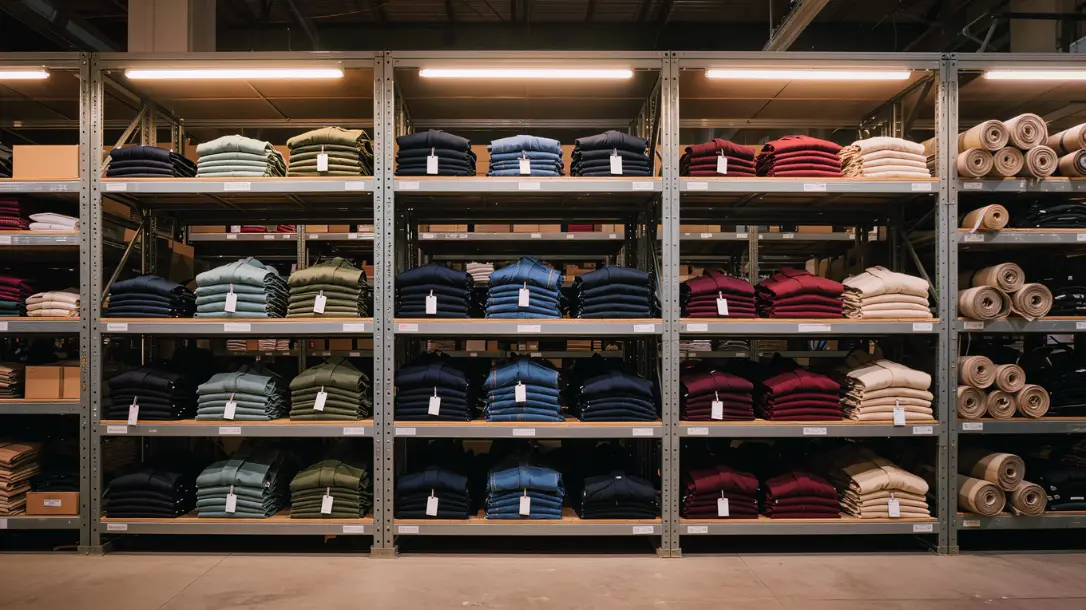
According to European Commission estimates, between 4% and 9% of the textile products placed on the European market are destroyed before being used. The Ecodesign for Sustainable Products Regulation (ESPR) now prohibits this practice for large companies. For buyers, retailers and distributors outside the EU, this opens up a new source of supply: stock lots of Italian and European clothing and footwear, which 2306 sources through its own network of authorised suppliers, inspects and delivers to their final destination.
What the regulation says
The ban applies to large companies, meaning those with at least 250 employees, or with an annual turnover above €50 million and a balance sheet total (the overall value of the company’s assets) above €43 million. Medium-sized companies will be subject to the ban from 19 July 2030; micro and small companies are exempt.
The ban covers the whole supply chain, not only brands: manufacturers, importers, distributors, retailers and logistics providers. A company subject to the ban cannot circumvent it by passing unsold goods to a small company to destroy on its behalf.
The products in scope are clothing and clothing accessories (whether made of leather, knitted or woven), hats, and footwear of all kinds. Fabrics, yarns and other textile raw materials are not covered. The European Commission may, however, add other products to the list in future.
What a company can do with unsold stock
Under the regulation, destruction means deliberately damaging a product or discarding it as waste, and this includes recycling. That leaves three routes: selling the goods (including outside the EU), donating them, or handing them to a specialised operator that checks them and restores them to a usable condition (what the regulation calls preparing for re-use).
Destruction is permitted in only ten cases, each of which the company must document, keeping the evidence for five years. The ten cases cover products that:
- are dangerous under the General Product Safety Regulation;
- do not comply with the law, where the law itself requires their destruction;
- are counterfeit or infringe trademarks, patents or other intellectual property rights;
- are covered by a licence that has expired and no longer permits their sale;
- carry labels, logos or protected designs that cannot be removed and that prevent re-use;
- are damaged, deteriorated or contaminated, where repair is impossible or would cost more than replacement;
- have design or manufacturing defects that cannot be repaired;
- were offered for donation to at least three social economy entities in the EU, or on the company’s website for at least eight weeks, and no offer was accepted (this case applies only where none of the cases above applies);
- were donated to a social economy entity that was unable to find a recipient for them;
- were restored to a usable condition by a specialised operator and offered for sale, but found no buyer.
Large companies must also disclose on their website, every year, how much unsold stock they have discarded, for what reasons and where it was sent.
What changes for importers
For a large European brand or retail chain, unsold stock is now merchandise that has to be sold: production surpluses, overstock, end-of-line stock and customer returns. For importers outside the EU, this means more stock lots available of Italian and European clothing and footwear, branded and unbranded.
The best lots do not appear on the stock lists that circulate in the trade: they change hands directly, between the companies that hold them and the buyers they already work with. Branded lots come with an additional condition: the supplier must be authorised to sell them in the destination country, otherwise the buyer risks legal disputes and having the goods detained by customs. We covered this in our article on top-brand stock for non-EU markets.
For importers in Argentina, Brazil, Paraguay and Uruguay there is a further advantage: the EU-Mercosur agreement lowers duties on clothing and footwear of European origin. We explain how in our article on the EU-Mercosur agreement.
How we work with you
Over more than thirty years, we have built direct relationships with Italian manufacturers and with a small network of suppliers authorised to sell stock outside the EU. This allows us to source and reserve lots for our clients, including lots that suppliers do not offer publicly.
You tell us the products, brands, volumes and destination country. We contact the suppliers, check that each lot is authorised for your market and send you an offer specifying quantities and prices. If you are interested, we negotiate the terms on your behalf, handle the documentation and manage the logistics. You have a single point of contact, from the first enquiry to the arrival of the goods.
Do you import clothing or footwear from Europe? Tell us what you are looking for and we will reply with a selection of available lots.
Sources: Regulation (EU) 2024/1781, Delegated Regulation (EU) 2026/296 and Implementing Regulation (EU) 2026/2, published in the Official Journal of the European Union; European Commission estimates.